
Inside Blackwell, delicate carvings of rowan berries and guelder rose creep across walls and cluster on the Great Hall’s Minstrel Gallery. Nature has entered the house.
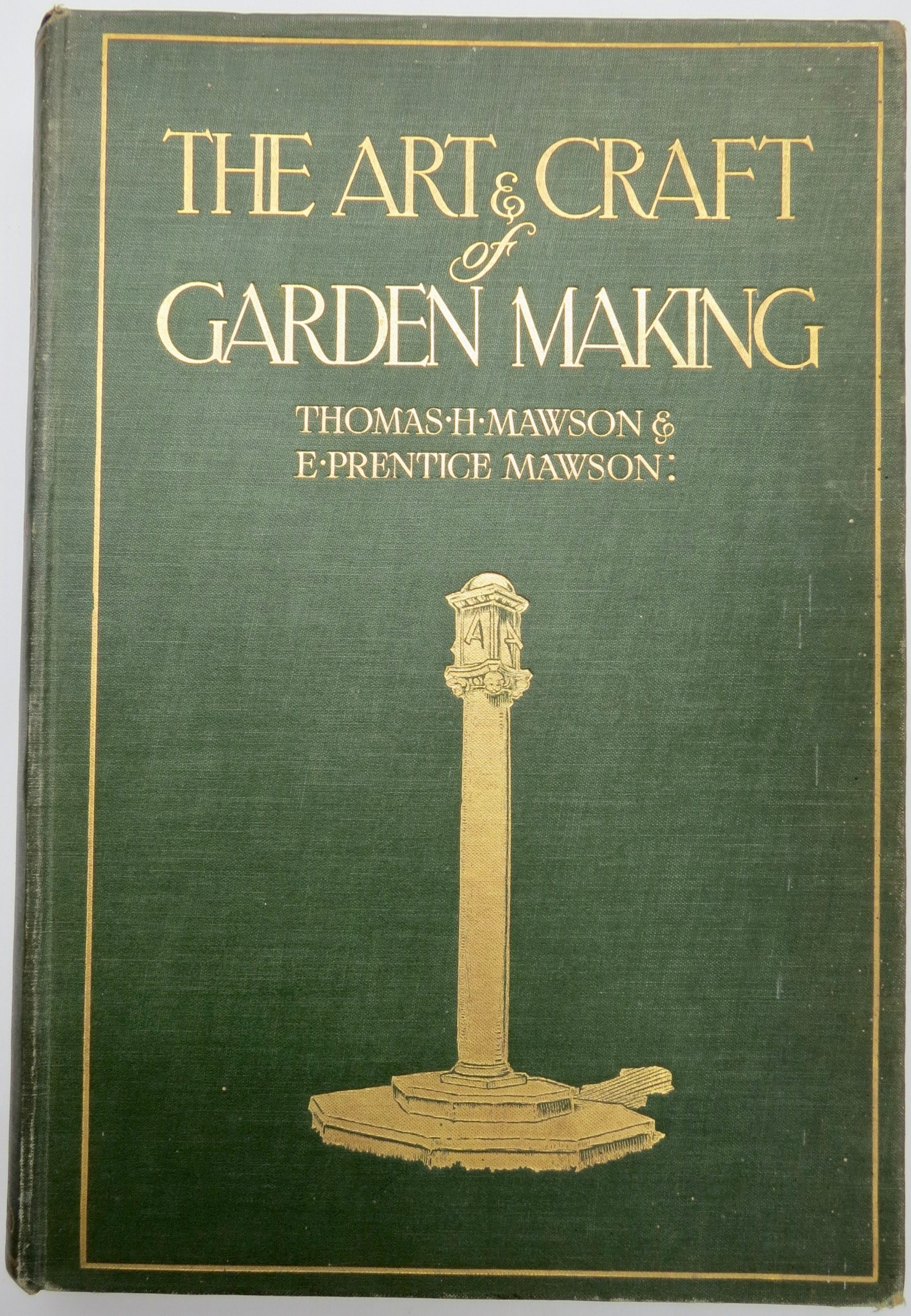
But glance out of the windows, and this accord between natural forms and architectural order continues beyond. For Blackwell is more than just the work of the architect, Mackay Hugh Baillie Scott. As the site’s landscape architect, Thomas Mawson, claimed in his The Art & Craft of Garden Making: ‘between the designer of the house and the architect of its setting, there must be the closest artistic sympathy and mutual appreciation if the result of the work is to be successful’.
A series of sheltered terraces transition the interior of the house out into the fields beyond, providing sweeping prospects of Windermere and the Coniston Fells. The forms and materials of the interior recur in the terraces, setting up a play between the house, the garden, and the wider landscape. Alongside Baillie Scott’s careful use of local materials and vernacular features, Mawson’s garden design is integral to the house’s engagement with the ‘spirit of the place’.
Despite this evident mastery of his craft, Mawson’s name no longer enjoys the recognition it once commanded, or that which is still enjoyed by his architect contemporaries—such as Sir Edwin Lutyens or C F A Voysey. Yet Mawson’s life was remarkable, and his ideas are as relevant as ever.
He was born in 1864 in the village of Scorton, North Lancashire, into a working-class household—his father worked as a warper in a local cotton mill. He had left school by the age of twelve, and, when his father died shortly after, was sent to London to work as a market gardener. There, he sketched the South Kensington Museum’s collections (now the Victoria and Albert Museum), gained several years of horticultural experience, and married Anna Prentice. On their honeymoon to the Lake District, in 1884, Mawson heard that his position at a London nursery had fallen-through; he consequently made the momentous decision to permanently move to Windermere and establish Mawson Brother’s Lakeland Nurseries, with his brothers running the nursery and Mawson hoping to make his name as a garden designer.
Over the next few decades, Mawson daringly expanded his activities to include areas in which he possessed no formal training: from garden design, to the design of public parks, and, eventually, to large-scale town planning. He approached each with the same ethos—all were simply ‘the art of correlating the component parts of a scheme over large areas’. In 1908, he was invited to represent Britain at the international competition to design the gardens of the Peace Palace at the Hague, which he won; in 1910, he undertook a lecture tour of the U.S., where his designs for major cities contributed to the City Beautiful movement—a social reform programme rooted in ‘beautifying’ North American urban planning.
The Greek Prime Minister commissioned Mawson to redesign the destroyed city of Salonika (present-day Thessalonica) in 1917; his efforts were rewarded with the Order of the Saviour, Gold Clasp, conferred by the King of Greece. Although the war scuppered his business’ further expansion, Mawson had gone from a local garden designer to the head of offices as disparate as Lancaster, London, Vancouver and Athens; became the President of the Town Planning Institute; and the first President of the Institute for Landscape Architects.
Despite these lofty achievements, Mawson never forgot his roots. His copious use of green, open spaces in his town plans derived from a belief that urban, working-class people were just as entitled to healthy spaces as the rural rich. During the war, he composed a book entitled An Imperial Obligation, in which he demanded that the government raise funds from industrialists to sponsor housing projects for disabled servicemen. Westfield Memorial Village in Lancaster is the fruitful outcome of these plans.
Whilst hurtling between his garden projects on trains, Mawson also wrote a long treatise on landscape architecture, which he called The Arts & Craft of Garden Making (1900). It contains ideas that continue to influence landscape architects to this day. At its heart is a rejection of the dominant eighteenth-century style of gardening invented by ‘England’s greatest gardener’, Lancelot ‘Capability’ Brown—which Mawson argued simply attempted to ‘imitate nature’—and an advocacy instead for rational designs connecting the house to the garden, and both to the wider context. When Blackwell opens once again, visitors will be able to explore the gardens and appreciate this subtly crafted relationship, integral to what Mawson called a garden’s ‘spirit of restfulness’.
