
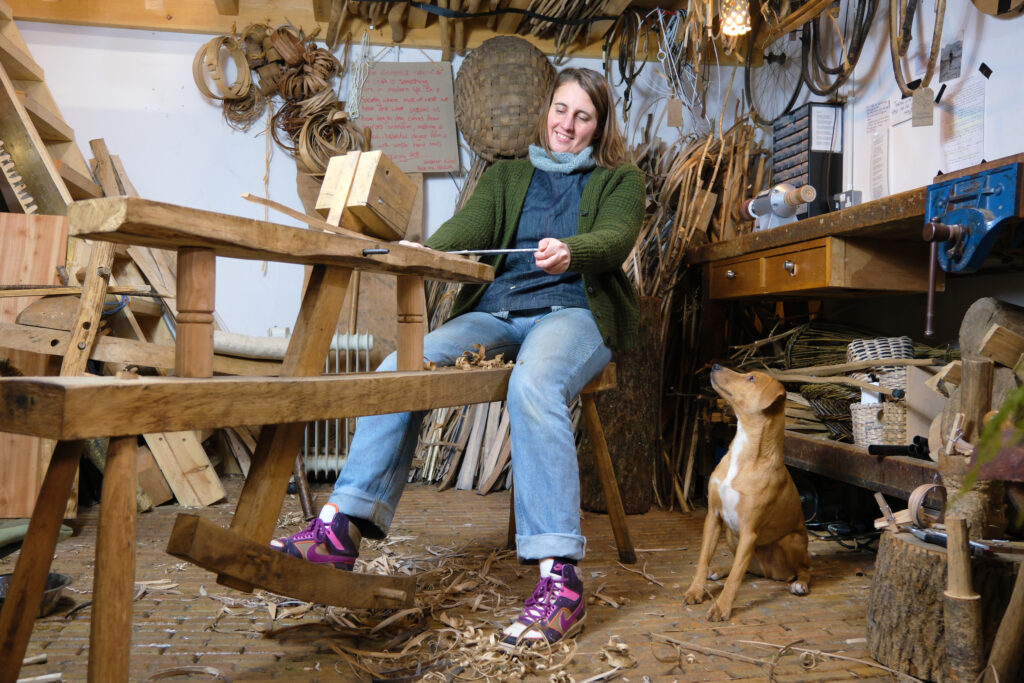
Our New Year New Maker for 2024 is Lorna Singleton. In this annual series, we will be platforming makers from across the United Kingdom whose practice champions traditional handicrafts, reflecting the ethos of the Arts & Crafts Movement.
Lorna Singleton is a basket weaver based in the Grizedale, Cumbria. Her craft is steeped in heritage and embraces the regional tradition of making ‘swill’ or ‘spelk’ baskets. She is one of the last two remaining swill baskets makers in the country, making her craft critically endangered.
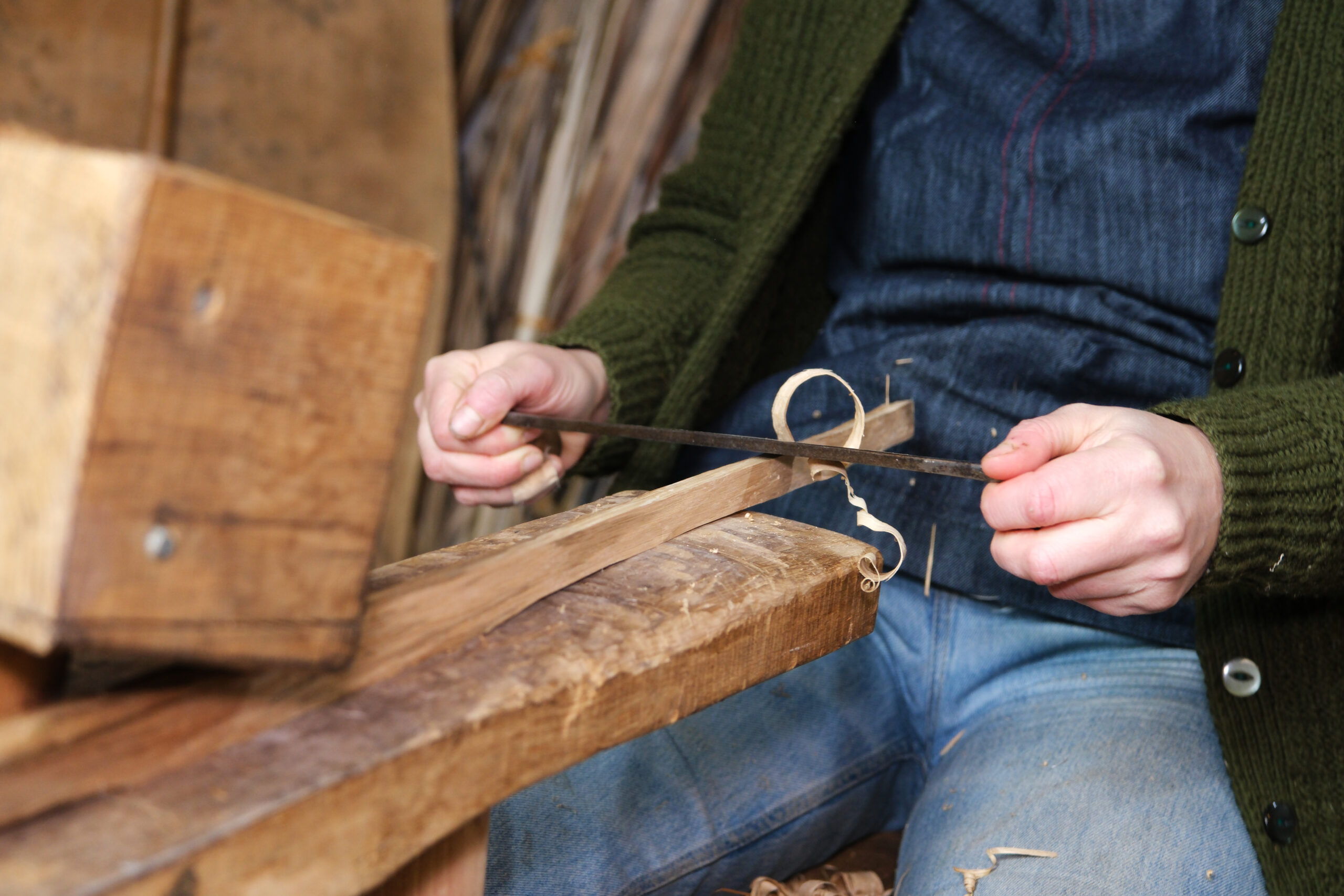
Singleton grows and harvests the raw materials for her baskets from local woodland, a process known as coppicing. The coppiced wood is soaked in large vats of water until the wood becomes malleable. The wood is then cut and shaved down to create equal width strands for weaving.
“I wanted to get into coppicing and woodland management and to make a product from the woodland I was managing. I tried lots of different crafts when I was an apprentice, but nothing stuck the same as baskets.
I love deconstructing a tree into component parts. The fact you can take something that’s flexible and weave it into something so solid and strong, it seems like magic to me.” – Lorna Singleton
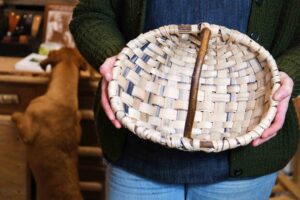
Spelk is a Cumbrian dialect word for splinter, in reference to the way the wood is splintered to create thin stands for weaving. They are also commonly known as swill baskets. One of their main uses was in cockle picking, pickers would collect cockles in the baskets and then ‘swill’ them clean in water.
Keeping the history of the craft alive is important to Singleton, who still coppices and weaves her baskets in the traditional way.
“I feel like as well as weaving baskets, it’s weaving these links of people who did it before me and trying to keep them alive, so that people in the future can keep it going. If those skills and techniques were lost, it would take a lot to rediscover them in the future, so I feel that it’s really important to keep them alive.”
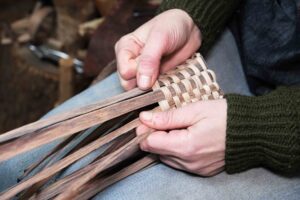
In addition to traditional spelk baskets, Singleton produces works of her own designs, influenced by patterns and baskets she encounters whilst travelling around the world. She makes these baskets from British woods such as oak and hazel, often treating the wood to create different finishes and patinas.
In the spirit of the Arts & Crafts Movement, it is important to Singleton that her works are useful, as well as beautiful.
“I have a spelk basket in my studio that is over 100 years old, that belonged to someone’s grandmother and was gifted to me. It’s been used by multiple generations of people for all sorts of things. I want my baskets to be loved and used like that.”

During the pandemic, Singleton developed long-covid. She reflects on how having a craft has enabled her to work in a slower and more therapeutic way, supporting both her physical and mental health.
“In terms of mental health and wellbeing, it’s really satisfying to create something. I can work for eight hours a day and I can see the products of my work, which is something that is missing in a lot of people’s lives. I think that’s something that makers have that is really healthy.”
Singleton regularly holds workshops and courses on basket weaving at her studio, in the hopes of passing on the craft to the next generation. Information on these courses can be found on her website, lornasingleton.co.uk
Watch the video below to find out more:
